
How to Prepare for a Vet Visit (and What to Tell the Vet)
Updated July 2026
To prepare for a vet visit, bring your pet's health records and medication list, write down your questions in advance, and be ready to describe symptoms precisely — when they started, how often they happen, and what has changed in eating, drinking, energy or bathroom habits. If the problem is digestive, bring a fresh stool sample. A dated timeline of what you have observed is the single most valuable thing you can give your vet, because your pet cannot tell them what is wrong.
Why your vet relies on what you have seen
A vet appointment is usually a short snapshot of a pet who is stressed, on alert, and often hiding how they feel. Animals instinctively mask illness — it is a survival trait — so a dog who has been sluggish and off their food all week may perk up in the exam room and seem perfectly fine. That is exactly why your observations matter so much. You see your pet every day, in their normal environment, and you are the one who notices the small changes a five-minute exam cannot reveal.
Think of yourself as the vet's eyes for the other 364 days of the year. The more accurate and specific your report, the faster and more confidently your vet can narrow down the cause — and the less likely they are to need repeat visits or extra tests just to gather information you already had.
What to bring to the vet
A little packing goes a long way. Before you leave, gather the following:
- Health and vaccination records. Your pet's medical history, recent test results, and proof of current vaccinations — especially important for a new vet or a first visit.
- A current medication list. Every medicine, supplement and flea or worm treatment your pet takes, with the dose and how often. Include anything you give occasionally.
- Your written questions. It is easy to forget half of them once you are in the room. A short list keeps the visit focused and makes sure nothing goes unasked.
- A fresh stool sample if the concern is digestive — diarrhea, worms, or a change in bathroom habits. Collect it the morning of the appointment and keep it sealed and cool; a sample less than a few hours old is far more useful.
- Photos or short videos of anything intermittent, like a limp, a cough, a seizure, or an unusual lump. These capture things that may not happen while you are at the clinic.
How to describe your pet's symptoms precisely
"He's just not himself" is a start, but vets can do far more with specifics. When you describe a symptom, try to answer four questions for each one.
When did it start, and how has it changed?
Pin down the timing as closely as you can. "Since Tuesday" is far more useful than "recently." Note whether the problem is getting better, getting worse, or staying the same, because the direction of change often points to the cause.
How often does it happen?
Frequency matters. Vomiting once is very different from vomiting six times a day. Count the episodes rather than rounding to "a lot," and note whether there is a pattern — after meals, at night, or during exercise.
What has changed in the daily basics?
Vets pay close attention to the four everyday signals: eating, drinking, energy, and bathroom habits. Is your pet eating less or more? Drinking noticeably more water? Sleeping more or reluctant to play? Any change in the frequency, color or consistency of their urine or stool? Shifts in these basics are frequently the earliest clue that something is wrong.
Why a dated timeline beats memory
Under the pressure of an appointment, memory gets fuzzy. Was it Monday or Wednesday the vomiting started? Three times or five? A dated timeline you have written down as things happened removes that uncertainty. Instead of guessing, you can read your vet a clear sequence of events — and that clarity often changes what tests and treatments they recommend.
Tip: Start logging the moment you first notice something off, not the day you decide to book. Even a couple of dated notes ("Jul 2 — refused breakfast, low energy") give your vet a real starting point.
Keeping the visit calm
A calmer pet is easier to examine and gives more reliable readings, so a little preparation helps everyone. If your pet travels in a carrier, leave it out at home for a few days beforehand with a soft blanket and treats inside, so it feels familiar rather than like a trap. Take your dog for a short walk before the appointment to burn off nervous energy, and bring a favorite toy or high-value treats to reward calm behavior in the waiting room. Staying relaxed yourself helps too — pets read our tension, so a steady, upbeat voice goes a long way.
The easy way: prepare for a vet visit with PetnotePlus
The hardest part of vet prep is remembering the details when it counts. A pet care app keeps a running, dated record so you can walk in with facts instead of guesses. Here is how to do it in the free PetnotePlus app:
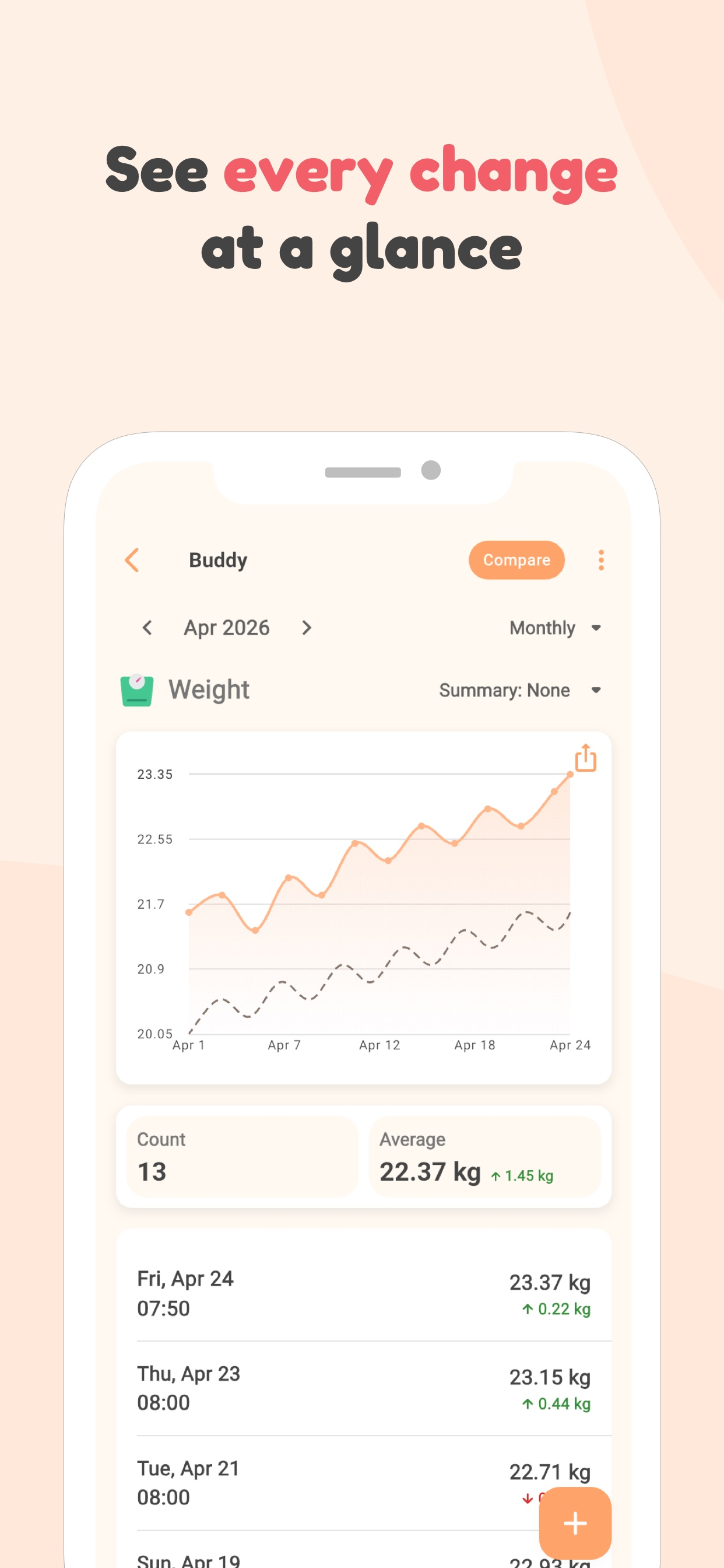
- Show the vet your actual data. Pull up the weight chart, temperature history, stool photos and medication history right on your phone — real logged numbers and images, not "I think it was around Tuesday."
- Build a symptom timeline. Log each observation in Today's Entries as it happens, with a photo attached, so you arrive with a clear dated sequence of what changed and when.
- Add the appointment to the calendar. Put the vet visit on the shared calendar and set an event notification so no one in the household forgets it — or forgets the fasting or sample instructions.
- Keep your medication list handy. Your logged medicine history doubles as an up-to-date med list you can read straight off the screen.
- Export a CSV to hand over. With Premium, export your records and expenses to CSV so you can email or print a clean summary for the clinic.
Walk into your next vet visit prepared
Log symptoms, track trends, and share with family — free on the App Store.


This guide is for general information only — always consult your veterinarian about your pet's health.