
How to Manage Multiple Pets in One Household
Updated July 2026
To manage multiple pets in one household, give each pet its own profile and health records, set per-pet routines for meals and medicine, keep one shared calendar for the whole household, and track spending per pet. Separate profiles are what prevent mix-ups — so the right diet, dose and vet history always stay attached to the right animal, no matter how many pets you have.
Why a multi-pet home gets chaotic
Loving several pets is wonderful; keeping their care straight is genuinely hard. Each animal has its own diet, its own medication, its own vaccination schedule and its own quirks. One dog needs a prescription food while the other must not touch it. The senior cat gets a daily tablet the kitten must never have. One pet's booster is due in March, another's in September. Hold all of that in your head and something will eventually slip — the wrong bowl, a missed dose, a vaccination you were sure you had already booked.
The goal is not to remember more; it is to rely on memory less. With the right structure, a busy multi-pet household runs on a system that keeps each animal's needs distinct and visible, so caring for four pets feels almost as simple as caring for one.
Give every pet a separate profile
The single most important habit is keeping each pet's information genuinely separate. When every animal has its own profile — with its own weight history, medication list, vet records and notes — nothing gets crossed. You always know that this weight belongs to Bella and that dose belongs to Max, because the records were never mixed in the first place. Separate profiles also make patterns easier to spot: a slow weight change in one pet stands out clearly when it is not tangled up with everyone else's numbers.
Set routines for each pet
Different pets, different schedules. Rather than trying to run the whole household off one mental checklist, set per-pet routines for the things that repeat: morning and evening meals, daily medication, weekly weigh-ins, monthly parasite treatment. Reminders tied to each individual animal mean you get prompted for Max's tablet and Bella's dinner as distinct tasks, which is exactly what stops the classic multi-pet errors of double-feeding one pet or forgetting another's medicine.
Tip: Feed pets on different diets in separate spots, and log each meal as you serve it. A quick tap per pet is far more reliable than trying to remember at bedtime who ate what.
Keep one shared calendar for the household
While each pet's care stays separate, your view of the week should be unified. A single household calendar that shows every pet's appointments, birthdays and reminders in one place stops two animals' vet visits from colliding and makes sure a grooming session is not forgotten because it was buried in a different list. One glance tells you what the whole household needs today — and, just as usefully, what is coming up next week.
Track spending per pet
Multiple pets mean multiplied costs — food, vet bills, medication, insurance, toys — and it is easy to lose track of where the money goes. Tracking expenses per pet turns a vague sense of "pets are expensive" into real numbers: you can see that one pet's medical costs are climbing, anticipate a big annual expense, and base your own household pet budget on reality instead of guesswork. Categorizing spending as you go also spares you a painful reconstruction of receipts later.
The easy way: manage a multi-pet home with PetnotePlus
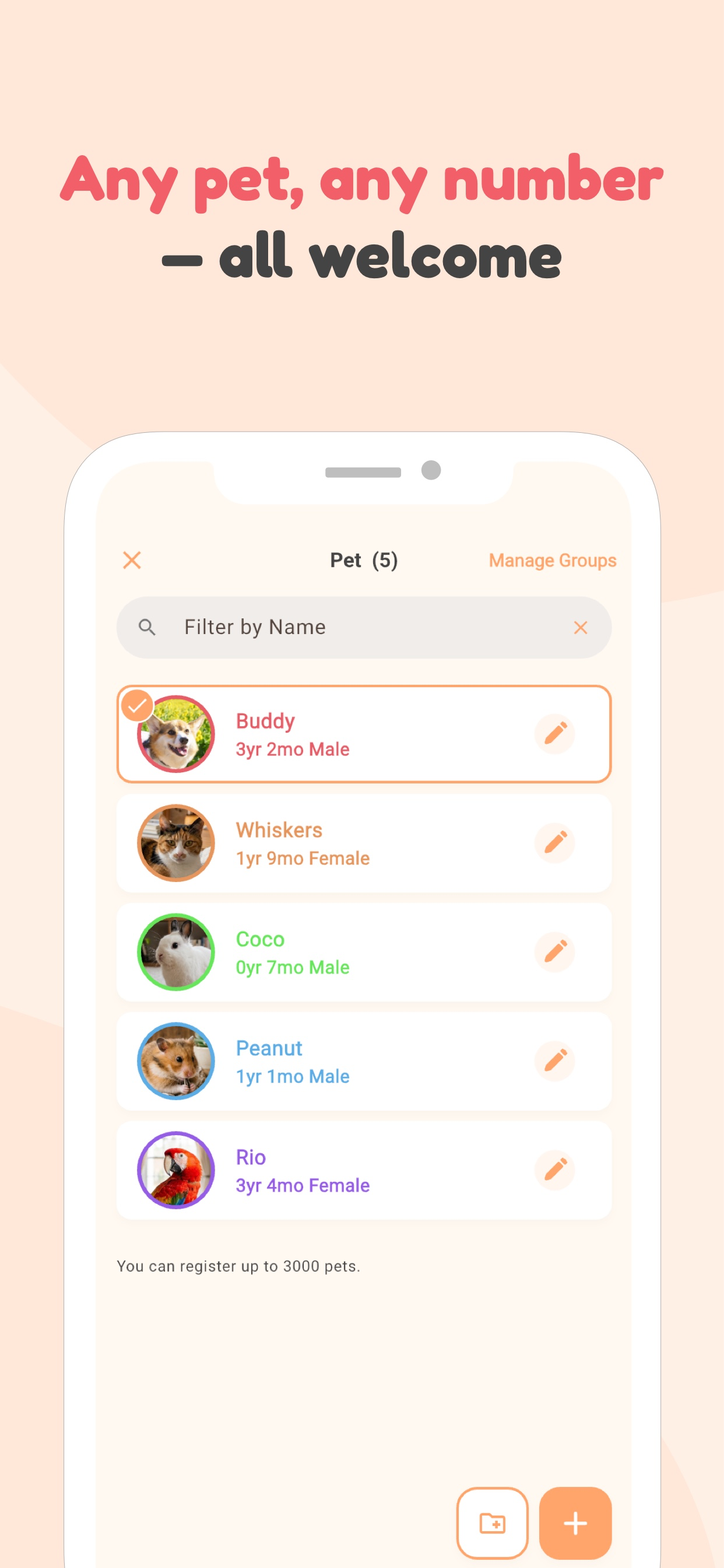
All of this — separate profiles, per-pet routines, a shared calendar and per-pet expense tracking — is what the free PetnotePlus app is designed to hold together. It handles any species and, in fact, up to 3,000 registered pets, so whether you have two dogs or a small menagerie of cats, rabbits, reptiles and birds, they all fit. Here is how it works:
- Register each pet with its own profile. Add every animal — dog, cat, rabbit, reptile or bird — with its own records, so nothing is ever mixed up between them.
- Keep per-pet records and charts. Log weight, temperature, medication and more for each pet, and view individual trend charts to catch changes early.
- Filter by pet. Switch to any single animal to see just their records, or view the household together — whichever you need in the moment.
- Track spending per pet. Sort expenses by category and pet, and use the per-pet summaries and pie charts to see exactly where your money goes.
- Share with the whole family. Family sharing lets every caregiver see every animal, so the entire household stays coordinated across all your pets.
Keep your whole menagerie organized
Separate profiles, per-pet expense tracking and family sharing — free for iOS and Android.


This guide is for general information only — always consult your veterinarian about your pet's health.