
Hamster Weight Chart by Breed: Syrian, Dwarf & Roborovski
Updated July 2026
Hamsters instinctively hide illness, and weight is one of the few health signals an owner can actually measure. Changes are hard to spot by eye alone, so a weekly weigh-in is one of the best habits for catching problems early. This guide covers healthy weight ranges by breed, how to weigh a hamster accurately, and how to keep the record going.
Hamster weight chart by breed
Start by checking the typical range for your hamster's breed. Knowing the ballpark for your own hamster makes any change easier to judge.
| Breed | Typical male | Typical female |
|---|---|---|
| Syrian (golden) hamster | 85–130 g (3.0–4.6 oz) | 95–150 g (3.4–5.3 oz) |
| Teddy bear & cream hamsters (Syrian varieties) | 85–130 g (3.0–4.6 oz) | 95–150 g (3.4–5.3 oz) |
| Winter white dwarf hamster (Djungarian) | 35–45 g (1.2–1.6 oz) | 30–40 g (1.1–1.4 oz) |
| Campbell's dwarf hamster | 30–40 g (1.1–1.4 oz) | 30–40 g (1.1–1.4 oz) |
| Roborovski hamster | 15–30 g (0.5–1.1 oz) | 15–30 g (0.5–1.1 oz) |
These numbers are only guidelines — individual and age differences are large. A hamster that sits a little outside the range but holds a steady weight of its own is usually perfectly fine. On the other hand, if the weight changes sharply, consider a vet visit first rather than worrying about the number itself.
How to weigh a hamster
A kitchen scale plus the tare button is all you need
With hamsters, changes of just a few grams matter, so a kitchen scale that measures in 0.1 g increments is ideal. Weighing takes seconds:
- Place a cup or container on the scale.
- Press the tare (zero) button so the display reads 0.
- Gently set your hamster in the container and read the number.
Tips for a hamster that won't sit still
If your hamster keeps moving, these tricks help:
- Put a treat in the container and read the scale while your hamster is busy eating
- Weigh your hamster inside a favorite tube or hideout, then subtract the container's weight afterwards
- Wait a few seconds for the display to settle — and if it won't, simply try again later
Weigh at the same time, under the same conditions
A hamster's weight can swing by a few grams depending on the time of day and whether it has just eaten. To read the trend correctly, weigh at the same time of day and under the same conditions every time — before the evening meal, for example. Keeping the conditions consistent is what gives small changes meaning.
How to keep the record going — and read the graph
What really matters in weight tracking is not any single number but the trend. A weight that looks normal on its own can, on a graph, turn out to be part of a slow decline over several weeks — a pattern that can be an early sign of illness. Conversely, a flat, stable line is reassurance in itself.
The easiest way to see the trend is a graph. The free pet health app PetnotePlus makes hamster weight tracking simple to keep up:
- Automatic weight charts. Just log the number and the trend appears at a glance.
- Works for hamsters and every other animal. Create your own tracking items, so alongside weight you can log food intake, wheel activity and more.
- Routine reminders so you never forget. Set a notification like "weigh-in every Sunday".
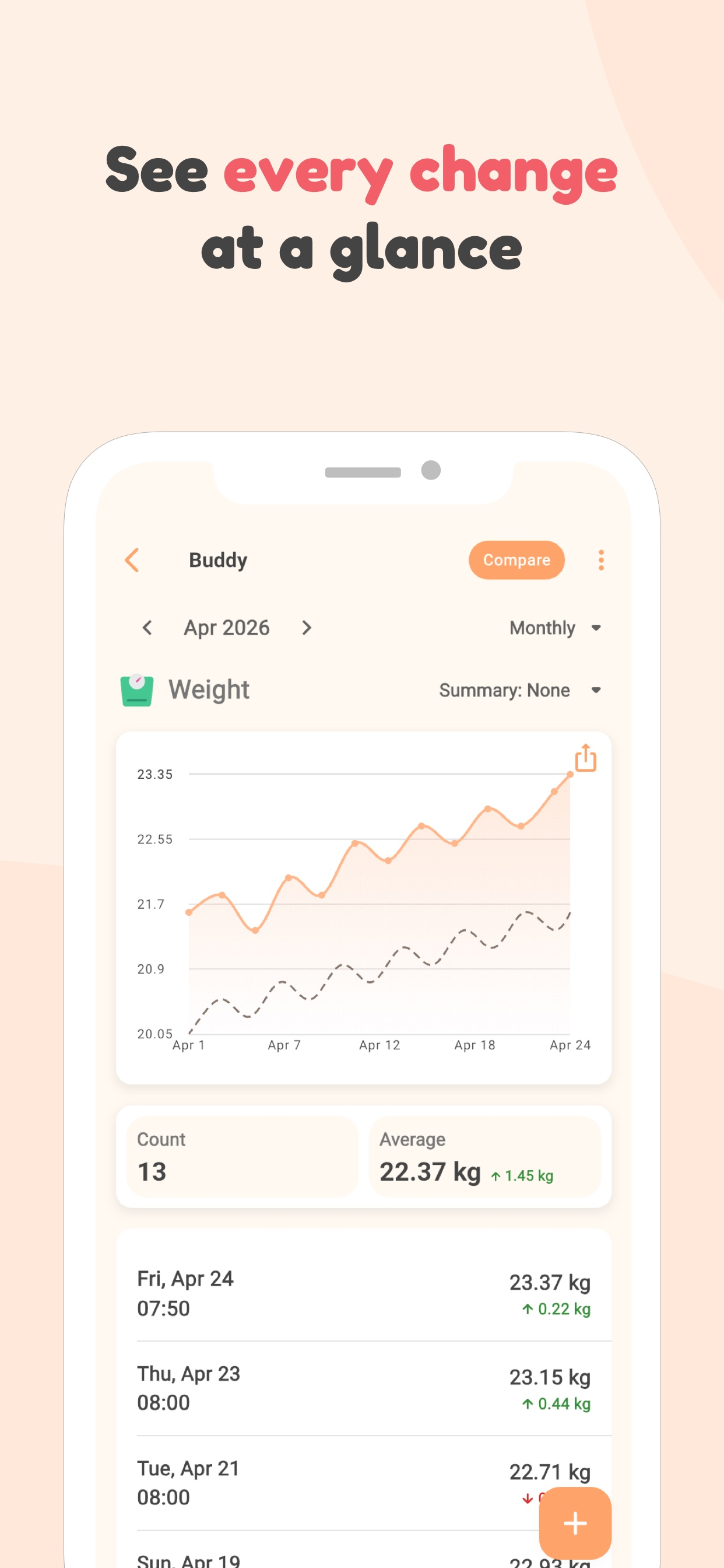
Hamster weight tracking made easy
Log it and it's charted. Reminders keep weigh-ins on schedule — free to use.


Checklist when your hamster is losing weight
If you notice the weight dropping, check these points as well. Being able to report them makes your vet's job much easier.
- Appetite: is more food or treats being left uneaten?
- Water intake: has drinking suddenly increased or decreased?
- Droppings: any diarrhea, soft stool, or fewer droppings than usual?
- Activity: less time on the wheel, or sluggish movement?
- Coat: fur looking scruffy or unkempt, or any hair loss?
As a rule of thumb, a weight loss of 10% or more within one to two weeks (for example, a winter white dropping from 40 g to 36 g) is a reason to consider a vet visit even without other symptoms. A hamster's condition can change quickly, so don't let "wait and see" drag on.
Frequently asked questions
How often should I weigh my hamster?
Once a week is a good baseline, weighed at the same time of day and under the same conditions (before a meal, for example). Consistency matters more than frequency — weighing the same way every time is what makes the trend readable.
What kind of scale should I use to weigh a hamster?
A kitchen scale that measures in 0.1 g increments is ideal. Place a cup or container on the scale, press the tare (zero) button, then gently set your hamster inside for an accurate reading.
How do I know if my hamster is overweight or underweight?
Pay more attention to sudden changes than to small deviations from the breed ranges. In particular, a loss of 10% or more within one to two weeks is a reason to consider a vet visit.
This guide is for general information only — always consult your veterinarian about your pet's health.